
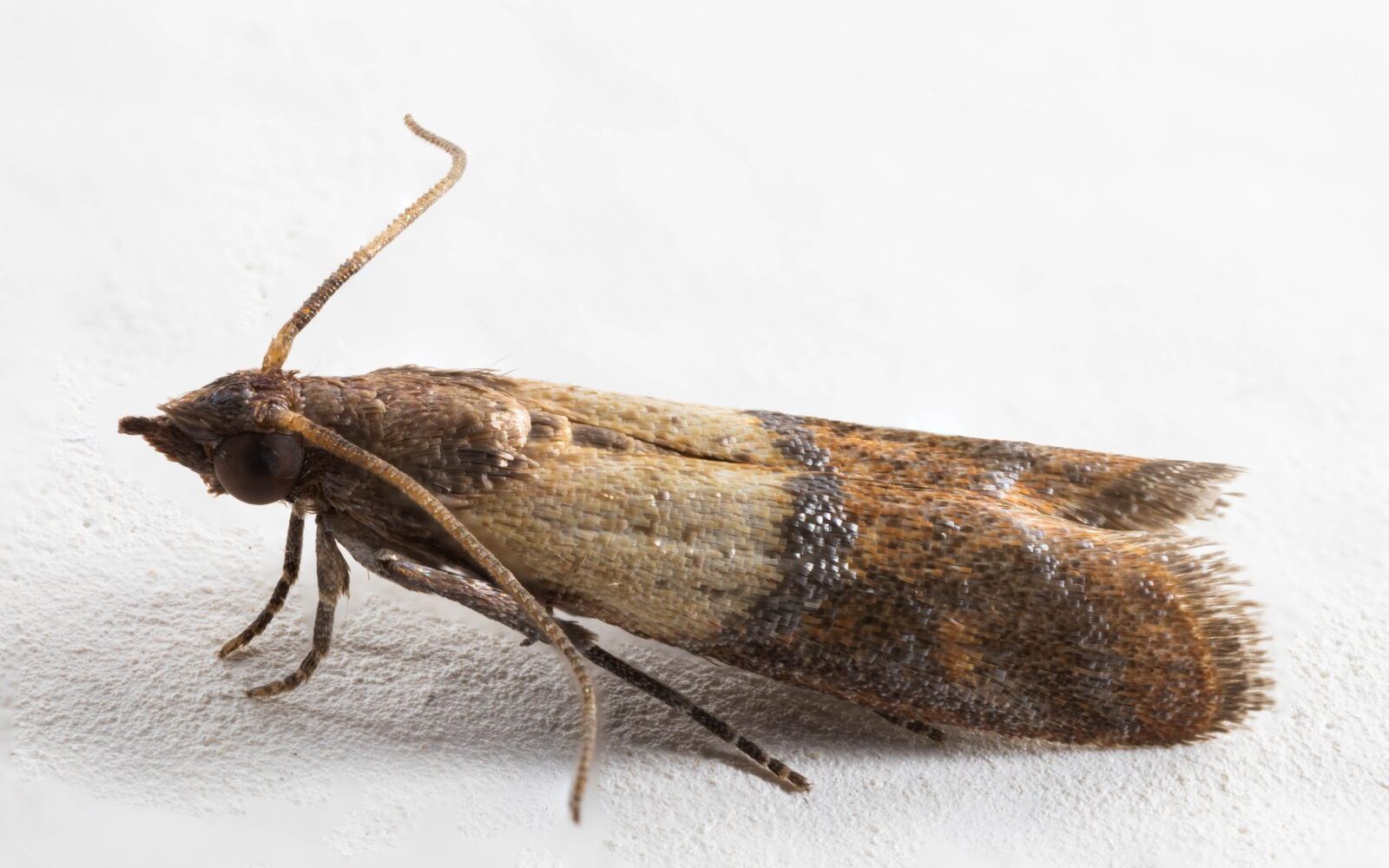
What It Looks Like
Adult pantry moths have a wingspan of about 13 to 19 mm, with wings that are bronze or copper-colored on the outer half and pale gray-tan near the body. The larvae are small, cream-colored caterpillars with a brown head capsule, typically found crawling in or near infested food.
Where It’s Commonly Found
Pantry moths live and breed inside stored dry goods such as flour, cereal, grains, dried fruit, pet food, and birdseed. Larvae spin fine silk webbing within infested packages, and once mature, they often wander away from the food source to pupate in nearby cracks, corners, or along the ceiling.
Signs of an Infestation
- Small moths flying erratically near the pantry or kitchen, often at night
- Silk webbing or clumping visible in flour, cereal, or other dry grain products
- Larvae crawling on pantry shelves, walls, or ceilings
- Small holes or tears in food packaging
Health & Property Risks
Pantry moths are a food-contamination pest rather than a health hazard. Their larvae and webbing spoil stored grains and dry goods, leading to wasted food, and finding larvae inside a food package can understandably be unsettling for homeowners even though the moths themselves pose no bite, sting, or disease risk.
Treatment Options
Effective pantry moth control starts with source elimination, meaning a thorough inspection to locate and discard every infested package, since even one overlooked source can restart the infestation. Pheromone trapping is used alongside this to monitor and reduce the adult moth population, and a pest control professional will typically recommend deep cleaning shelving and cracks where eggs or larvae may remain.
Products & Methods We Use
- Pheromone traps for monitoring and reducing adult moths
- Crack-and-crevice treatments for shelving and storage areas
- HEPA vacuums for thorough pantry cleanup
Prevention Tips
- Store dry goods such as flour, cereal, and grains in sealed, airtight containers
- Rotate pantry stock regularly and use older items first
- Inspect new grain, cereal, and dry good purchases before placing them in the pantry
- Clean pantry shelves periodically to remove spilled food and residue
- Discard old or expired dry goods rather than letting them sit indefinitely
- Set out pheromone traps to catch an early infestation before it spreads