
What It Looks Like
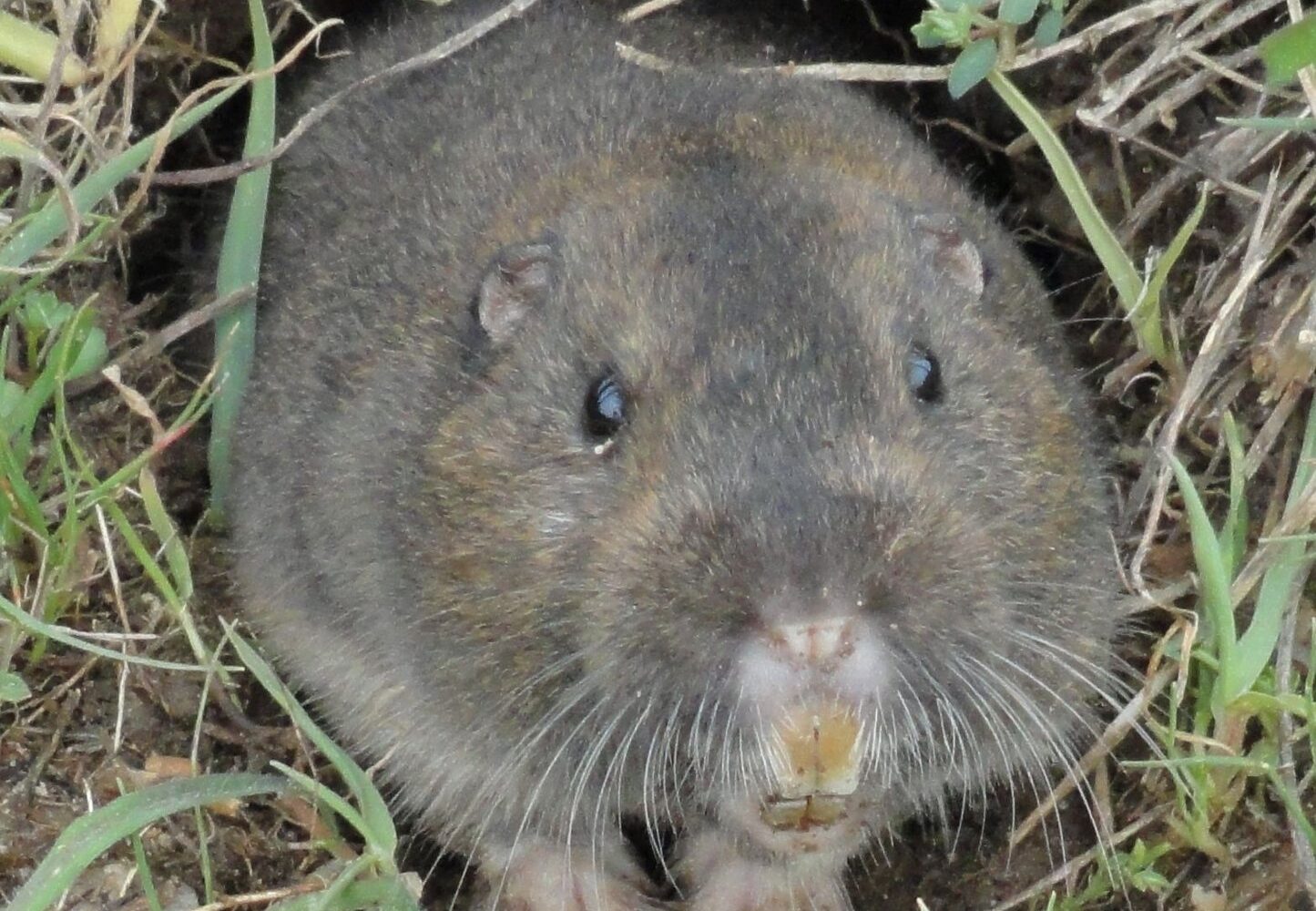
Gophers and moles are frequently mistaken for one another, but they're quite different animals. Pocket gophers are stocky, brown-furred rodents about 15-25 cm long with small eyes and ears, and their most recognizable feature is a pair of large, visible front teeth used for gnawing roots and plant matter. Moles are smaller, roughly 10-18 cm long, with velvety gray-brown fur, tiny or hidden eyes, no visible ears, and large, paddle-like front feet built for digging. The two also leave different calling cards: gophers push up fan- or crescent-shaped dirt mounds with a plugged hole visible off to one side, while moles create raised, winding surface ridges as they tunnel just below the turf, along with volcano-shaped mounds of finer soil.
Where It’s Commonly Found
Both animals are found in lawns, gardens, and open turf areas with soft, workable soil, though gophers tend to favor areas with abundant roots, bulbs, and vegetation to feed on, while moles are drawn to soil with a healthy population of grubs, earthworms, and insects. Gophers build extensive burrow systems that can extend well beyond a single yard, and moles create shallow surface tunnels for hunting along with deeper permanent tunnels for nesting and travel.
Signs of an Infestation
- Fan- or crescent-shaped dirt mounds with a visible plugged hole to one side (gopher)
- Raised, winding ridges just under the lawn surface (mole)
- Volcano-shaped mounds of loose, fine soil (mole)
- Wilting, yellowing, or dying plants and shrubs with roots that appear chewed or missing (gopher)
- Spongy or uneven turf that gives underfoot along tunnel lines
- Vegetable garden or flower bed plants disappearing from below
Health & Property Risks
Neither gophers nor moles pose a direct health risk to people, and neither is typically aggressive or prone to entering homes. The real risk is to the lawn and landscape: gophers feed on roots, bulbs, and plant stems and can kill or severely damage vegetable gardens, ornamental plants, and even young trees and shrubs, while moles feed on grubs, earthworms, and insects and cause damage indirectly through their tunneling rather than by eating plants. Both animals' tunnel systems can undermine soft soil near foundations, patios, and irrigation lines over time, and extensive tunneling can create uneven or unstable ground in high-traffic areas of the yard.
Treatment Options
- Inspection to identify whether the activity is gopher, mole, or both, since the two require different trapping and treatment approaches
- Underground tunnel trapping placed directly in active gopher or mole runways for humane and effective removal
- Baiting specific to the target species, applied directly into the tunnel system rather than on the surface
- Habitat modification such as reducing grub populations to make a lawn less attractive to moles
- Ongoing monitoring after treatment, since both animals can migrate in from neighboring properties
Products & Methods We Use
- Underground tunnel traps for gophers and moles
- Grub control treatments to reduce mole food sources
- Tunnel-specific baiting systems
- Soil probes and monitoring flags for tracking active runways
Prevention Tips
- Treat lawns for grubs to reduce the food source that attracts moles
- Install underground mesh barriers around garden beds or the perimeter of the yard to block burrowing rodents
- Monitor garden beds and vegetable plots for early mound or tunnel activity
- Avoid overwatering, since consistently moist soil is more attractive to both grubs and burrowing wildlife
- Plant bulbs and root vegetables in wire baskets in high-risk areas
- Contact a pest management company at the first sign of mounding, before tunnel systems become extensive