
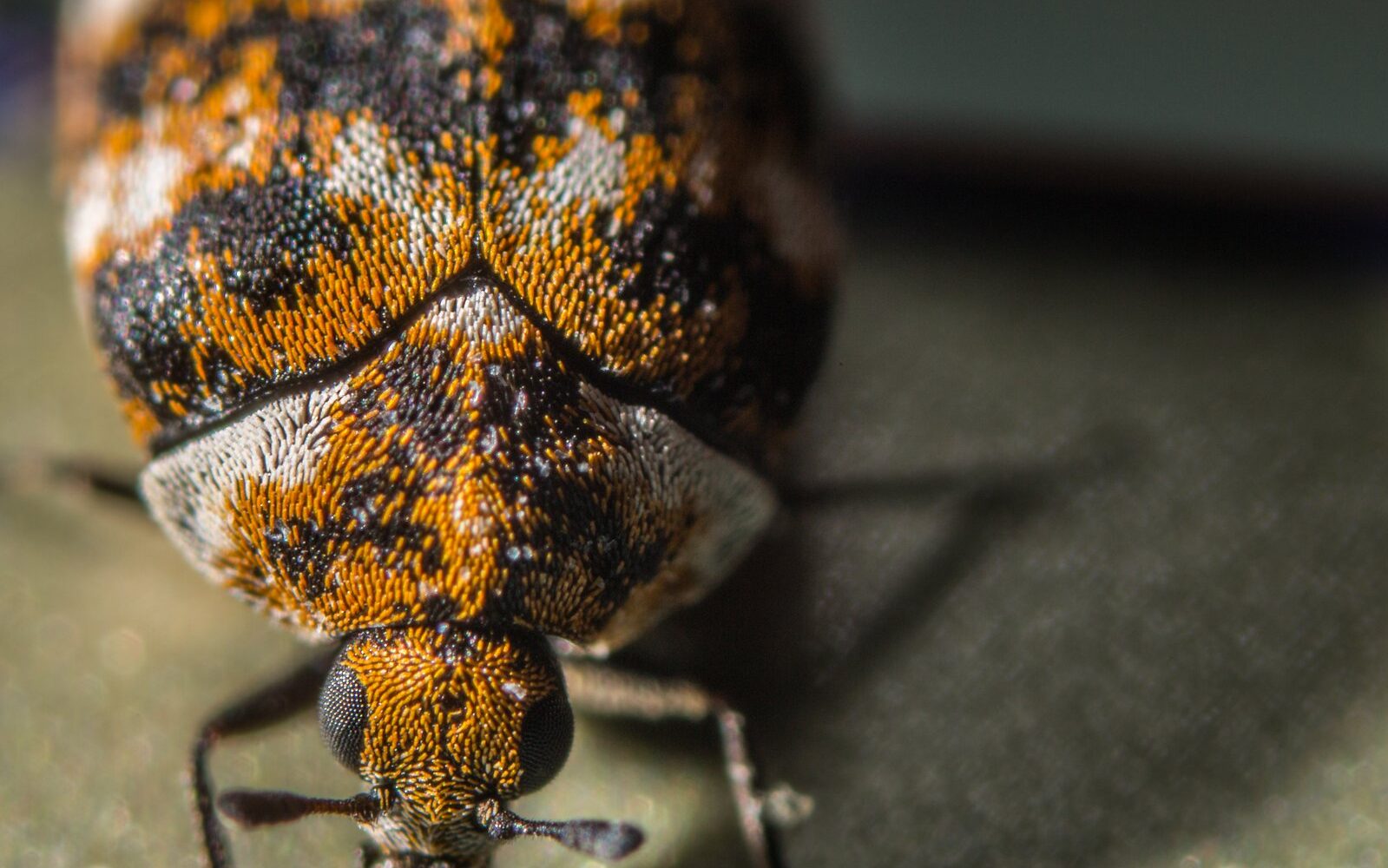
What It Looks Like
Adult carpet beetles are small, oval insects about 1.5 to 3 mm long, often mottled with patterns of black, white, yellow, and orange scales, though some species are solid black. The larvae look quite different, appearing fuzzy and bristled with a tapered, carrot-shaped brown body.
Where It’s Commonly Found
Adult carpet beetles are often first noticed outdoors feeding on pollen near windows before making their way inside. Once indoors, the larvae seek out dark, undisturbed areas such as closets, under furniture, inside air ducts, and within wool rugs, upholstery, and stored clothing, where they feed for weeks or months.
Signs of an Infestation
- Irregular holes or bare patches in wool clothing, carpets, or upholstered furniture
- Shed larval skins, or casings, found in closets, drawers, or along baseboards
- Live larvae found near baseboards, in stored fabrics, or inside closets
- Adult beetles seen clustering near windowsills
Health & Property Risks
Unlike many nuisance pests, carpet beetles pose a genuine risk to fabrics and textiles. Their larvae feed on natural fibers including wool, silk, fur, and feathers, and can damage clothing, carpets, upholstery, and even museum-quality heirloom textiles if left unchecked. In sensitive individuals, the tiny shed hairs from carpet beetle larvae can also trigger skin irritation or allergic reactions.
Treatment Options
Effective control combines a residual treatment of infested areas with thorough vacuuming of carpets, upholstery, closets, and baseboards to physically remove larvae, casings, and eggs. A pest control technician will also identify and treat harborage areas, and will typically recommend laundering or dry cleaning any infested textiles to fully break the infestation cycle.
Products & Methods We Use
- HEPA vacuums for larvae, casings, and shed hairs
- Residual insecticide treatments for infested areas
- Crack-and-crevice treatments along baseboards and closets
- Pheromone traps for monitoring adult beetle activity
Prevention Tips
- Vacuum carpets, rugs, and upholstery regularly, including under furniture and along baseboards
- Store off-season wool and natural-fiber clothing in sealed, airtight containers
- Clean up pet hair and lint promptly, since both serve as a food source for larvae
- Inspect secondhand furniture, rugs, and clothing before bringing them into the home
- Keep closets and storage areas well ventilated and free of dust buildup
- Schedule a periodic inspection with a pest control technician to catch infestations early