
What It Looks Like
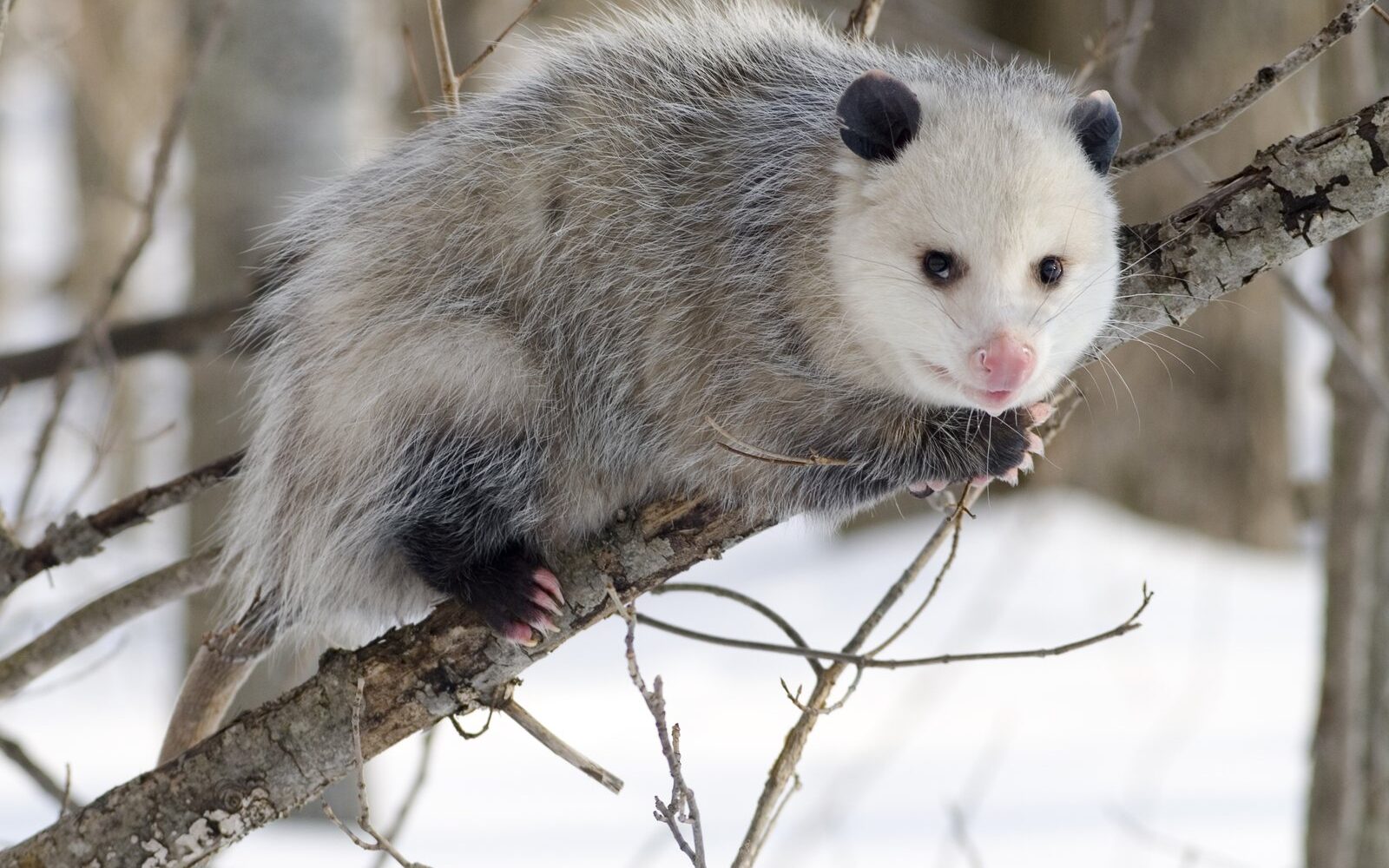
The Virginia opossum is a cat-sized marsupial, generally 15-20 inches long plus a long, hairless prehensile tail, with coarse grayish-white fur, a pointed pink-white face, and a mouth of about 50 sharp teeth, more than any other North American mammal. Their black, leathery ears and dark eyes give them a somewhat startling appearance, and they move with a slow, deliberate, ambling gait rather than the quick darting motion of many other backyard wildlife.
Where It’s Commonly Found
Opossums are highly adaptable and turn up in wooded yards, gardens, brush piles, and drainage areas, often denning in existing cavities such as brush piles, hollow logs, or abandoned burrows rather than digging their own. Around homes, they commonly take shelter under decks, porches, sheds, or in crawlspaces, and occasionally in attics if there's easy access. They're solitary, nocturnal foragers that don't build permanent nests, moving between several denning sites over time.
Signs of an Infestation
- Overturned trash cans or scattered garbage, especially overnight
- Pet food disappearing or bowls disturbed after dark
- Sightings of an opossum ambling across the yard at dusk or night
- Droppings or matted den material under decks, sheds, or porches
- A hissing or open-mouth threat display if the animal is startled, which is a bluff rather than true aggression
- An opossum appearing to "play dead" when cornered, a genuine involuntary defense behavior
Health & Property Risks
Opossums are largely beneficial and generally harmless to people: they aren't aggressive, rarely bite unless cornered and handled, and their well-known "playing dead" response is a real, involuntary defense behavior rather than a threat display. They also eat large numbers of ticks, slugs, snails, and other garden pests, making them one of the more beneficial wild visitors homeowners encounter. One common misconception worth correcting: opossums are not typical rabies carriers. Their unusually low body temperature makes them a poor host for the rabies virus, so while it isn't biologically impossible, confirmed cases are rare. The more realistic concerns are property-level ones: they can raid trash cans and pet food left outdoors, and a family denning under a deck, porch, or shed can leave droppings and odor behind.
Treatment Options
- Inspection to locate the active den site under a deck, porch, shed, or crawlspace
- Humane live trapping and relocation where permitted, since trapping and relocation regulations vary by state and jurisdiction
- One-way exclusion doors installed at the den entrance so the opossum can leave but not return, checked to confirm no young are left behind before final sealing
- Removal of accessible food sources such as unsecured trash and outdoor pet food to discourage a return visit
- Exclusion sealing of gaps under decks, porches, and foundations once the animal has vacated
Products & Methods We Use
- Humane live traps
- One-way exclusion doors
- Exclusion mesh and lattice barriers for decks and porches
- Wildlife-rated sealants for foundation and crawlspace gaps
Prevention Tips
- Secure trash cans with locking or animal-proof lids
- Bring pet food and water bowls inside at night
- Install mesh or lattice barriers around the base of decks, porches, and sheds to block denning access
- Keep grills and outdoor cooking areas clean of food residue
- Seal crawlspace vents and foundation gaps
- Clear brush piles and dense ground clutter near the home that could serve as a denning site