
What It Looks Like
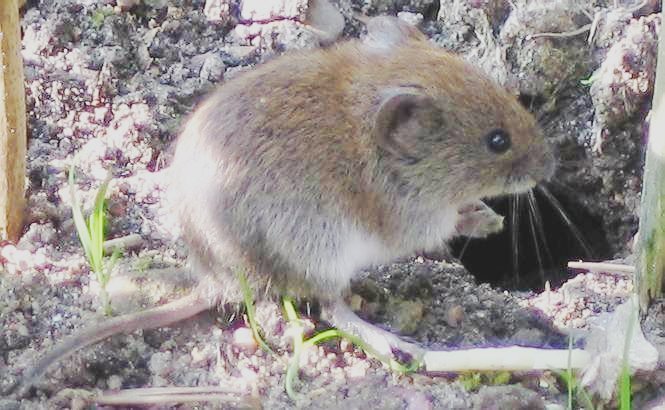
Voles are small rodents, typically 5 to 8 inches long including the tail, with brownish-gray fur, a stocky rounded body, small eyes and ears, and a notably short tail. They're often mistaken for mice, but their heavier build and much shorter tail set them apart at a glance.
Where It’s Commonly Found
Voles are primarily an outdoor, yard-based pest that live in lawns, gardens, and areas with dense ground cover, mulch, or tall grass. They create visible surface runways through grass and shallow burrow systems underground, and they remain active year-round, including through winter under snow cover.
Signs of an Infestation
Homeowners usually notice vole activity through the damage left behind rather than the animals themselves. Common signs include:
- Narrow, visible runways worn through grass or ground cover
- Small burrow entrances, roughly the size of a golf ball, in the lawn or garden beds
- Gnaw marks on tree bark or roots near ground level
- Damaged bulbs, roots, or perennial plants
Health & Property Risks
Voles don't pose a direct health risk to people, but they can cause real damage to a property. Their runways and burrowing can tear up lawns, and their gnawing can strip bark from the base of young trees and shrubs, which in severe cases can girdle and kill the plant. They also feed on garden bulbs, roots, and groundcover, and heavy vole activity can attract predators like snakes to the yard.
Treatment Options
Vole control typically combines several approaches rather than relying on one method alone. A pest management company may use bait stations and trapping to reduce active populations, along with habitat modification — cutting back dense ground cover, tall grass, and mulch buildup near structures and garden beds — and destruction of existing tunnel systems to discourage voles from re-establishing.
Products & Methods We Use
- Vole bait stations
- Tunnel and runway traps
- Habitat modification tools
Prevention Tips
- Keep grass mowed and pull mulch back a few inches from tree trunks and shrub bases
- Remove brush piles, dense ground cover, and garden debris where voles can hide
- Install hardware cloth or tree guards around the base of young trees and vulnerable plants
- Reduce weeds and overgrown vegetation in garden beds
- Watch for new runways or burrow entrances so activity can be addressed early
- Contact a pest control professional for an evaluation if damage continues despite yard cleanup