
What It Looks Like
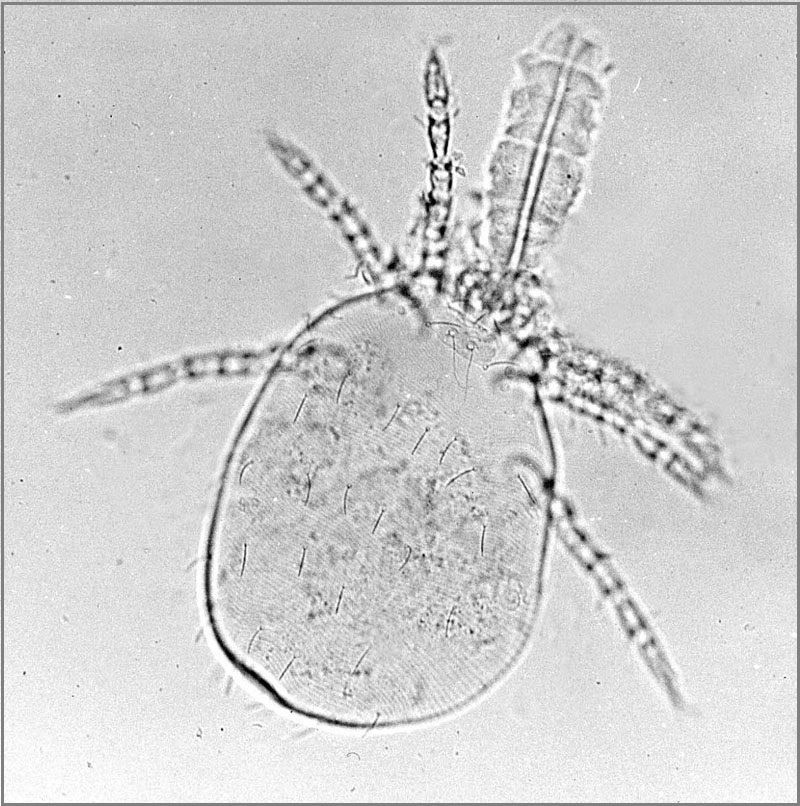
Chiggers are the larval stage of a type of mite and are nearly invisible to the naked eye, appearing as tiny reddish-orange specks. At this larval stage they have six legs rather than the eight legs of adult mites. Because of their size, most people never actually see a chigger — they only notice the bites left behind.
Where It’s Commonly Found
Like ticks, chiggers are a yard and perimeter pest rather than an indoor infestation concern. They're found in tall grass, weedy areas, wooded edges, and shaded spots near water, where they cling to vegetation and attach to people or animals brushing past. Chiggers don't live in homes or set up indoor colonies — they're picked up outdoors and cause bites that show up after the fact.
Signs of an Infestation
The main sign of chigger exposure is intensely itchy, red welts that typically appear hours after being outdoors, often clustered around the ankles, waistline, or other areas where clothing fits snugly against the skin. There's usually no visible insect to find by the time the itching starts, since the larvae drop off after feeding.
Health & Property Risks
Chigger bites are uncomfortable but generally low-risk. The intense itching is caused by a histamine reaction to the chigger's feeding process — contrary to a common myth, chiggers do not burrow under the skin. They insert a feeding structure, inject digestive enzymes that break down skin cells, feed briefly, and then drop off. Importantly, chiggers in the United States are not known to transmit disease to humans, which sets them apart from ticks. Scratching bites too aggressively can occasionally lead to secondary skin infection, so it's best to avoid breaking the skin.
Treatment Options
Because chiggers share habitat with ticks, treatment approaches often overlap. A pest control technician will typically reduce tall grass and leaf litter in problem areas of the yard, then apply a targeted acaricide treatment to grassy and wooded zones where chigger activity is highest.
Products & Methods We Use
- Yard and perimeter tick and chigger treatments
- Granular or spray acaricide applications
- Habitat modification tools for tall grass and weed reduction
Prevention Tips
- Avoid sitting or walking through tall grass, weeds, and overgrown areas when possible
- Mow the lawn regularly and keep weedy patches trimmed back
- Wear long pants tucked into socks when walking through grassy or wooded areas
- Apply an insect repellent to skin and clothing before outdoor activities
- Shower and change clothes promptly after spending time in grassy or wooded areas
- Launder clothes worn outdoors in hot water to remove any remaining larvae