
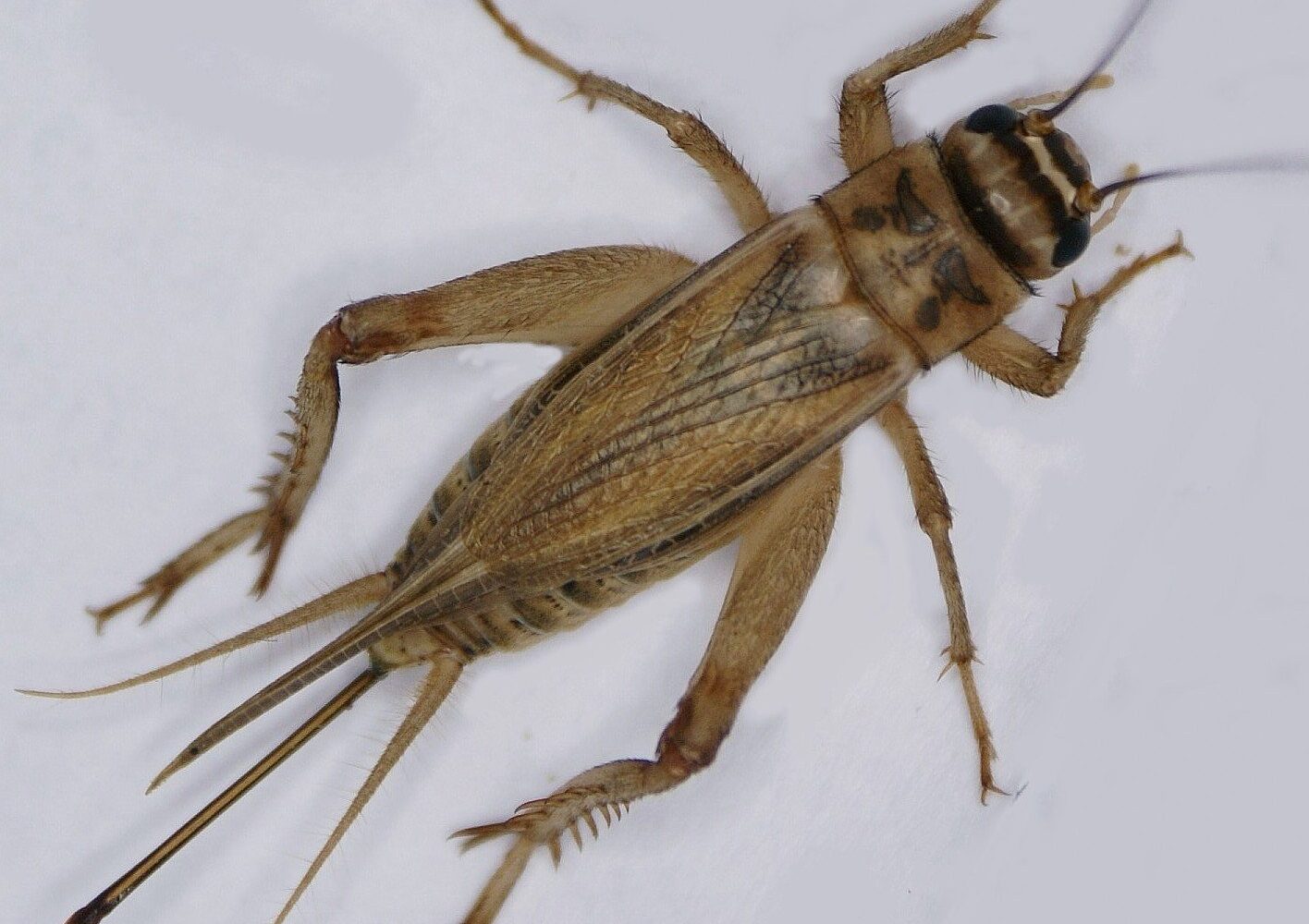
What It Looks Like
Crickets are brown to black insects, typically 1/2 to 1 inch long, with long antennae and large hind legs built for jumping. Male field and house crickets produce the familiar chirping sound by rubbing their wings together, while camel crickets are humpbacked, wingless, and silent but can startle homeowners with their size and erratic jumping.
Where It’s Commonly Found
Crickets live outdoors in grass, mulch beds, woodpiles, and under debris, but they'll move indoors seeking warmth, moisture, or shelter, especially as temperatures drop in fall. Basements, crawl spaces, garages, and areas near foundation cracks are common entry points and hiding spots once inside.
Signs of an Infestation
The most obvious sign is the chirping noise heard at night, which can be surprisingly loud from just one or two crickets in a wall void or basement. Homeowners may also notice:
- Occasional sightings of crickets jumping across floors
- Minor chewing damage to fabric, paper, or houseplants
- Crickets clustered near doors, windows, or foundation gaps
Health & Property Risks
Crickets are mostly a nuisance pest rather than a dangerous one. They don't bite people, sting, or spread disease. The main complaints are the persistent chirping noise and occasional minor damage to fabrics, paper goods, or seedlings from house crickets feeding. Camel crickets don't chirp but can be unsettling due to their size and jumping ability.
Treatment Options
Because cricket problems usually stem from outdoor populations finding their way in, an exterminator typically focuses on an exterior perimeter barrier treatment around the foundation, combined with sealing common entry points. Reducing outdoor harborage near the home helps prevent new crickets from taking the place of ones that are treated.
Products & Methods We Use
- Residual perimeter sprays
- Granular perimeter treatments
- Glue traps for monitoring indoor activity
Prevention Tips
- Seal cracks and gaps around the foundation, doors, and windows
- Reduce outdoor lighting near entry points, since lights attract crickets at night
- Clear leaf litter, mulch, and debris away from the foundation
- Store firewood away from the house and off the ground
- Address moisture issues in basements and crawl spaces
- Install or repair weatherstripping on exterior doors