
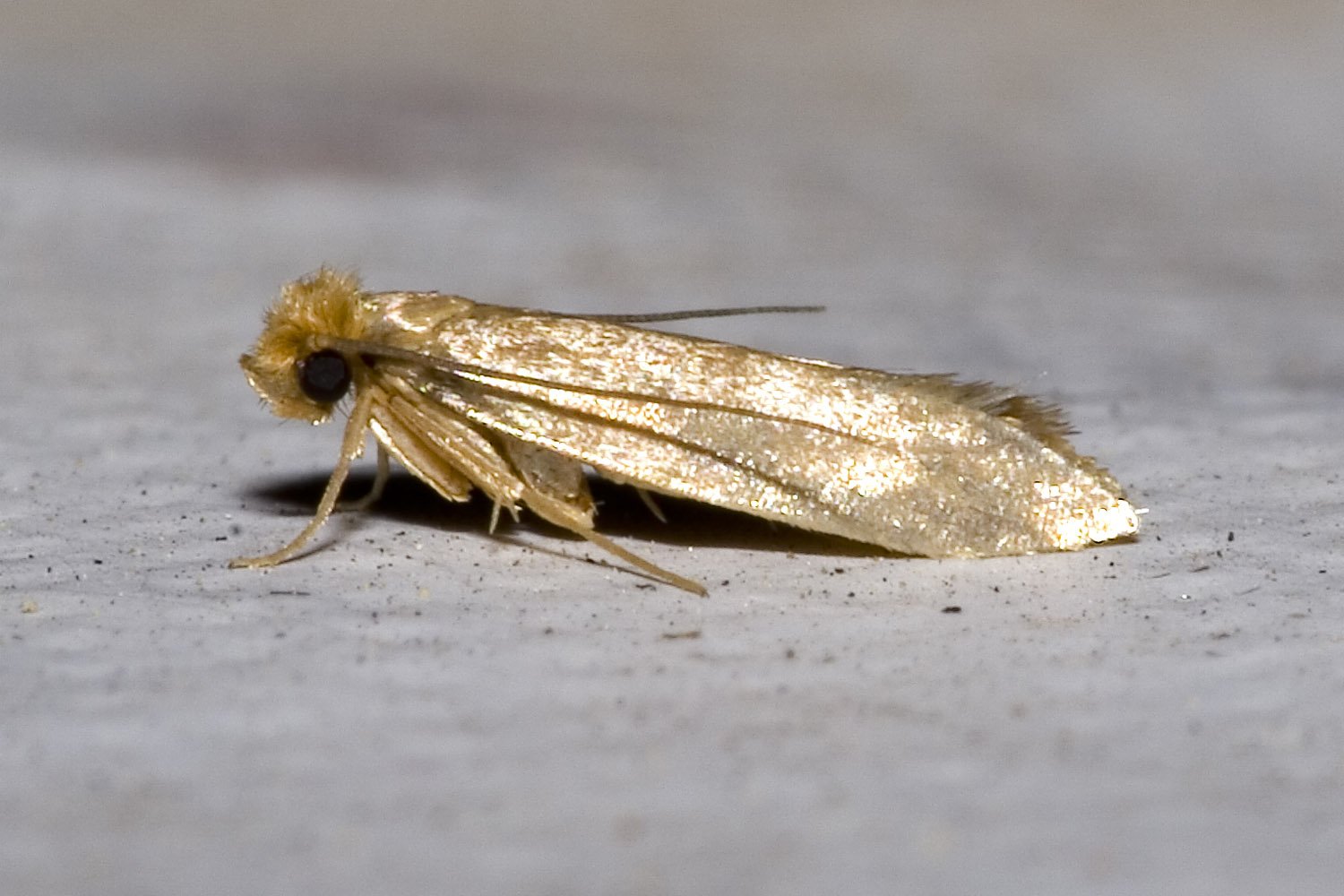
What It Looks Like
Adult clothes moths are small, buff to golden-tan in color, and measure about 1/4 to 1/2 inch long with narrow, fringed wings. Unlike many household moths, they avoid light and rarely gather around lamps or windows, which is why they often go unnoticed. It's actually the larvae — small, cream-colored caterpillars — that cause the damage, not the adult moths themselves.
Where It’s Commonly Found
Clothes moths favor dark, undisturbed areas where natural-fiber items are stored for long periods, such as closets, cedar chests, attics, and storage boxes. They're drawn to wool, fur, feathers, felt, and silk, and are especially common in items that have been soiled with food residue, sweat, or body oils, which larvae find more appealing.
Signs of an Infestation
Homeowners typically notice irregular holes in sweaters, coats, blankets, or wool rugs before they ever see the insect responsible. Other signs include:
- Silky webbing or small case-like tubes on fabric
- Small white or cream-colored larvae in folds of clothing or carpet
- Shed larval skins or fine debris near stored textiles
- Adult moths fluttering weakly out of dark closets when disturbed
Health & Property Risks
Clothes moths pose no direct health threat to people or pets. Their impact is financial and sentimental — larvae feed on keratin, the protein found in wool, fur, feathers, and silk, which can permanently damage clothing, blankets, upholstery, and wool carpets if left unaddressed. Heirloom or irreplaceable textiles are often the most costly losses.
Treatment Options
Effective treatment combines monitoring with targeted fabric care. A pest control professional will typically use pheromone trapping to identify activity levels and locate infested areas, paired with cleaning or laundering of affected textiles to kill eggs and larvae. Closets, storage boxes, and other harborage areas are treated directly rather than the whole home, since infestations are usually localized.
Products & Methods We Use
- Pheromone traps for monitoring and population reduction
- Cedar-based repellent products
- Textile-safe treatments for closets and storage areas
- Vacuuming equipment for larvae and egg removal
Prevention Tips
- Store wool, fur, and other natural-fiber items in sealed, airtight containers
- Launder or dry-clean clothing before long-term storage to remove food and sweat residue
- Vacuum closets, carpets, and upholstery regularly, paying attention to edges and corners
- Use cedar blocks or sachets as a deterrent in storage areas
- Inspect secondhand clothing, rugs, and furniture before bringing them into the home
- Contact a pest control technician if you notice recurring damage or larvae in stored textiles