
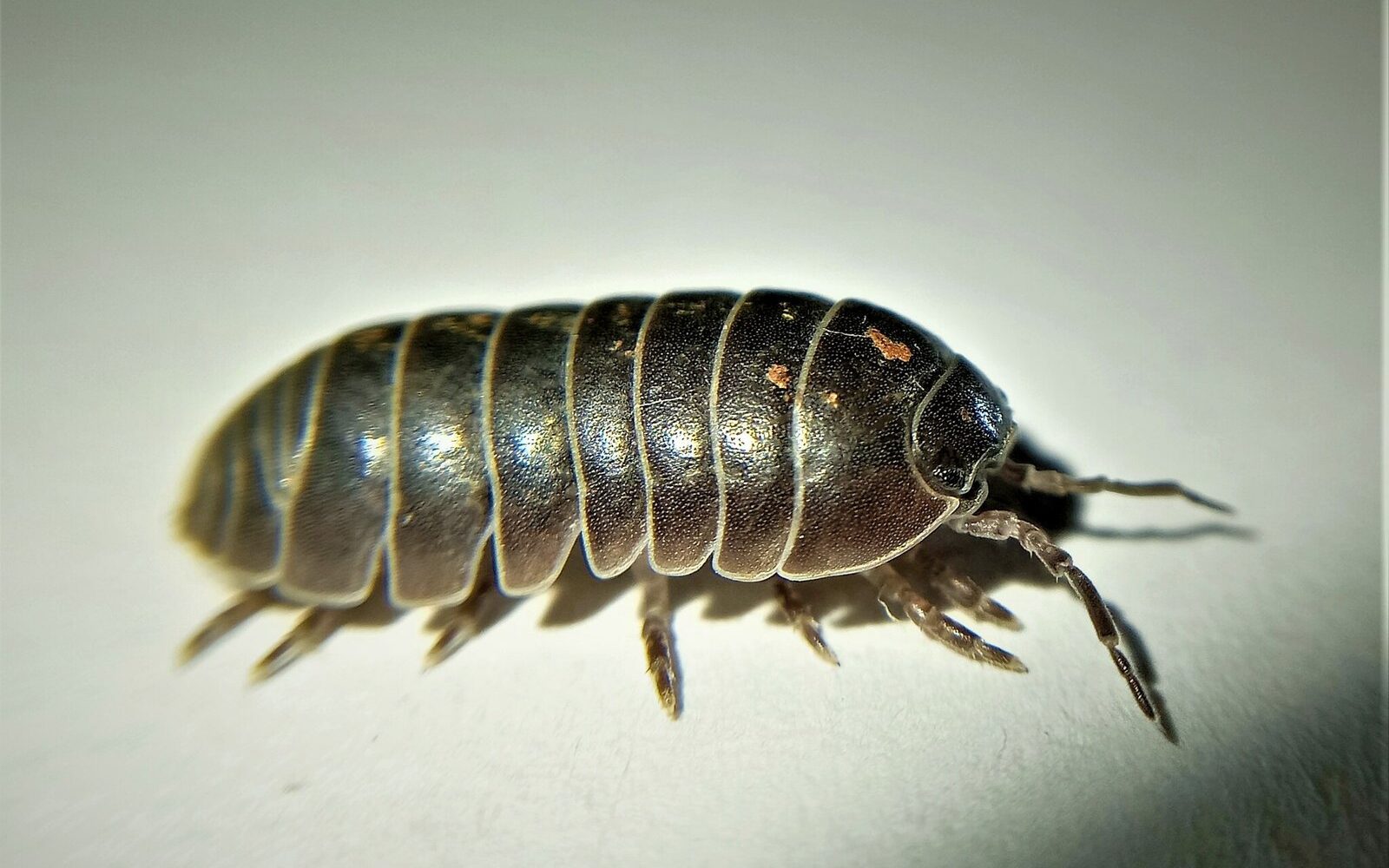
What It Looks Like
Pillbugs and sowbugs are small, segmented, armored land crustaceans ranging from about 1/4 to 5/8 inch long, typically gray to brown in color, with seven pairs of legs. Pillbugs can roll themselves into a tight ball when disturbed, which is why they're commonly called roly-polies, while sowbugs cannot roll up and have two small tail-like appendages at the rear.
Where It’s Commonly Found
Both species thrive in moist, dark environments outdoors, commonly found under mulch, leaf litter, stones, logs, and flower pots. They rely on damp conditions to survive and are frequently found near foundations with high moisture, occasionally wandering into crawl spaces, basements, or ground-floor rooms, especially after rain.
Signs of an Infestation
- Clusters found under mulch, flower pots, or landscaping stones near the foundation
- Occasional stragglers found on damp basement or crawl space floors
- Increased sightings indoors following rain or periods of high humidity
- Presence of moist, decaying organic matter such as leaf piles close to the home
Health & Property Risks
Pillbugs and sowbugs are harmless nuisance pests. They do not bite, sting, transmit disease, or damage wood or structures. Indoors, they typically dry out and die quickly since they depend on moisture to survive, so their presence is mostly a sign of dampness rather than a pest infestation risk.
Treatment Options
Because pillbugs and sowbugs depend on moisture, treatment focuses on reducing damp conditions around the foundation along with an exterior perimeter application to limit the population before it reaches the house. An exterminator will also inspect for entry points and address conditions like excess mulch or poor drainage that keep the area attractive to these pests.
Products & Methods We Use
- Residual exterior perimeter sprays
- Crack-and-crevice treatments around foundation entry points
- Dehumidifiers or moisture-control equipment for crawl spaces and basements
Prevention Tips
- Fix leaky faucets, downspouts, and gutters that create damp soil near the foundation
- Improve yard grading and drainage so water moves away from the house
- Keep mulch pulled back several inches from the foundation
- Remove leaf litter, woodpiles, and other debris close to exterior walls
- Ventilate crawl spaces and basements to reduce excess moisture
- Seal gaps around foundation walls and door thresholds