
What It Looks Like
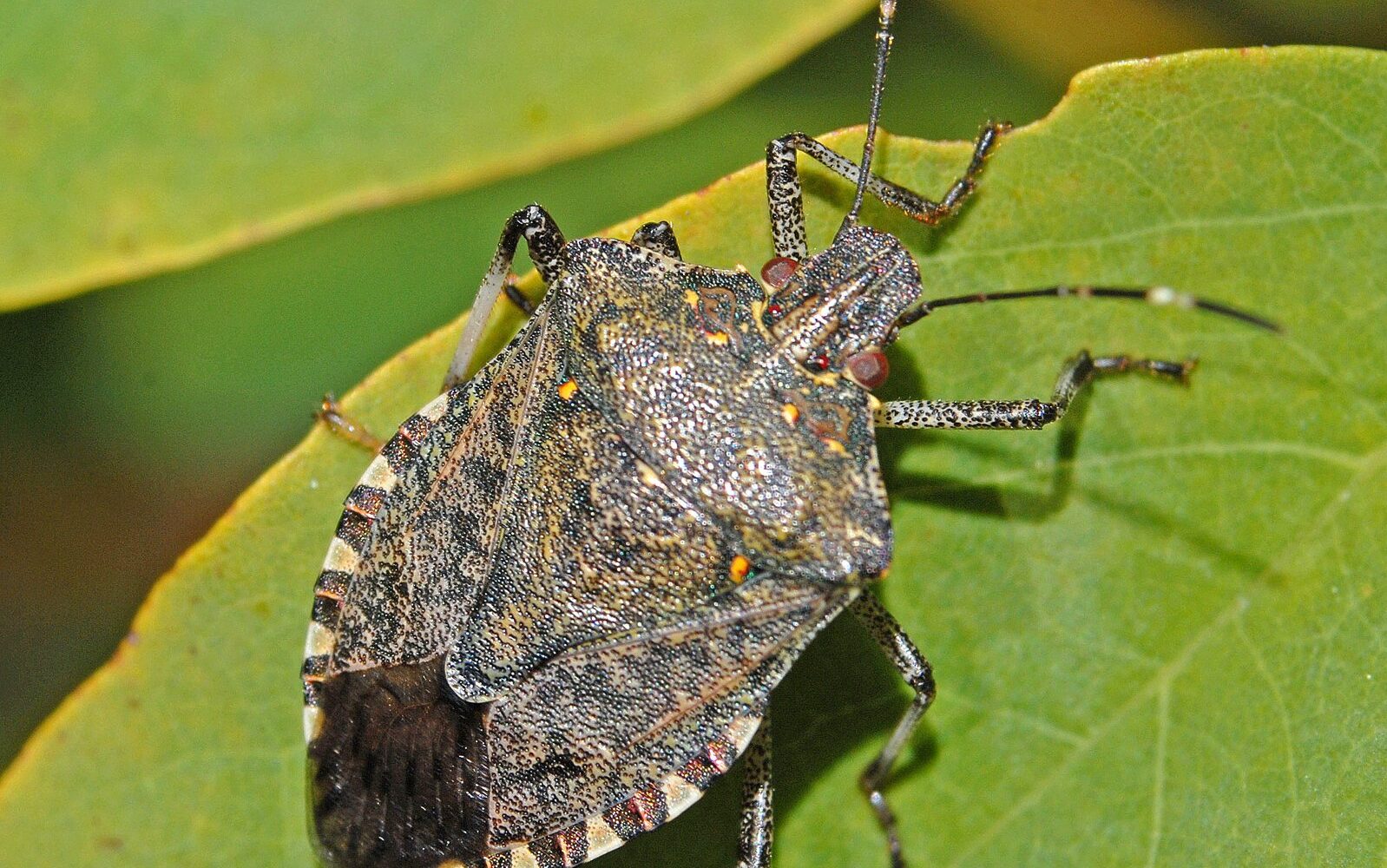
Stink bugs have a distinctive shield-shaped body, roughly five-eighths of an inch long, typically mottled brown or gray, though some species are green. Their antennae are banded with alternating light and dark segments, another helpful identifying feature. As their name suggests, stink bugs release a strong, unpleasant odor from glands on their body when disturbed, handled, or crushed.
Where It’s Commonly Found
During warmer months, stink bugs live outdoors on plants, gardens, and agricultural crops, where they feed on fruits, vegetables, and other vegetation. As temperatures drop in fall, they seek out sheltered spots to overwinter and often move toward homes, gathering on sun-warmed exterior walls before slipping inside through small gaps around windows, doors, siding, and utility penetrations. They frequently overwinter in attics, wall voids, and other undisturbed areas, sometimes in large clusters.
Signs of an Infestation
- Clusters of stink bugs on sun-facing exterior walls in late summer and fall
- Live or dead stink bugs found on window sills, in attics, or near light fixtures
- A noticeable unpleasant odor when a stink bug is disturbed or accidentally crushed
- Sightings on garden plants, fruit trees, or vegetable crops during the growing season
Health & Property Risks
Stink bugs are a nuisance pest rather than a dangerous one. They do not bite or sting people, are not known to spread disease, and don't cause any structural damage to a home. The main issues are the strong, unpleasant odor they release when disturbed or crushed and the sheer number of bugs that can gather indoors while overwintering, which some homeowners find unsettling. Outdoors, they can be a more meaningful problem for garden plants and crops, feeding on fruits and vegetables, though this poses little risk inside the home.
Treatment Options
The most effective stink bug control focuses on exclusion before they attempt to move indoors in early fall. A pest control company will typically seal likely entry points around windows, doors, siding, and utility lines, and may apply an exterior perimeter treatment in late summer to intercept stink bugs before they reach the house. Indoors, vacuuming up any stink bugs, rather than crushing them, along with targeted crack-and-crevice treatment at entry points, helps manage an existing presence.
Products & Methods We Use
Common treatment tools include residual perimeter sprays timed for the fall migration period, crack-and-crevice dust treatments at windows, doors, and siding gaps, exclusion and sealing materials for entry points, and glue board or light-trap monitors to track activity.
Prevention Tips
- Seal cracks and gaps around windows, doors, siding, and utility penetrations before early fall
- Repair or replace damaged window and door screens
- Install door sweeps on exterior doors
- Schedule an exterior perimeter treatment in late summer, before stink bugs begin seeking shelter
- Vacuum up any stink bugs found indoors rather than crushing them, to avoid the odor
- Reduce exterior nighttime lighting, which can attract stink bugs toward the home