
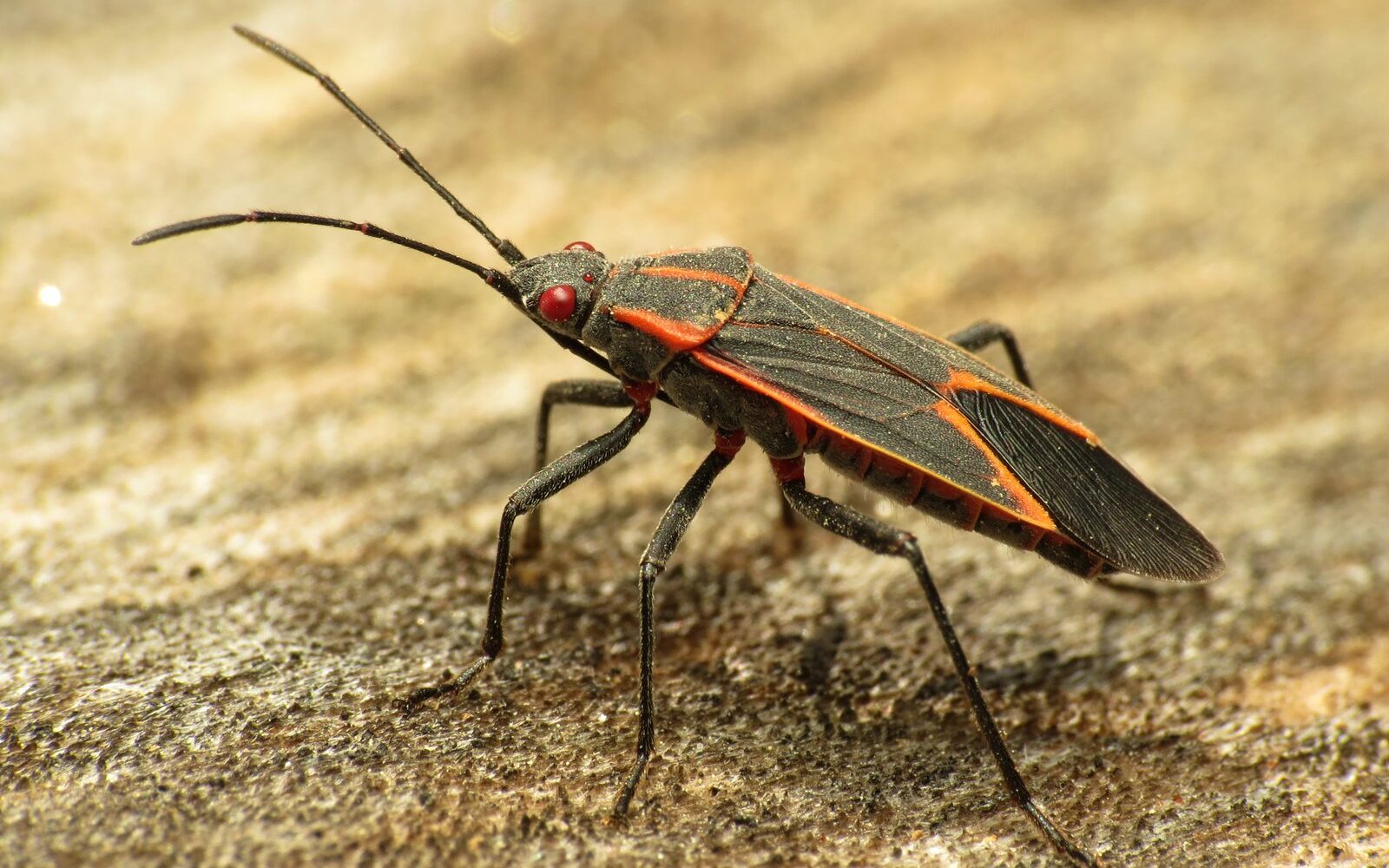
What It Looks Like
Adult boxelder bugs are about 1/2 inch long with a flattened, elongated oval body. They are mostly black with distinctive reddish-orange lines along the edges of their wings and body, making them easy to identify against light-colored siding or stone.
Where It’s Commonly Found
Boxelder bugs feed and breed on boxelder, maple, and ash trees, where they lay eggs in bark crevices through the warm months. As temperatures drop in fall, they migrate toward buildings, clustering on sun-warmed exterior walls, rocks, and foundations before slipping through small gaps to overwinter in wall voids, attics, and other protected spaces.
Signs of an Infestation
- Large clusters of black and orange bugs on south- or west-facing exterior walls in fall
- Bugs appearing indoors near windows, baseboards, or light fixtures during fall and again in spring
- Reddish-orange staining on curtains, walls, or fabric if the bugs are crushed
- Boxelder, maple, or ash trees nearby with visible bug activity
Health & Property Risks
Boxelder bugs are considered a harmless nuisance pest. They do not bite, sting, spread disease, or damage structures or wood. The main concern for homeowners is the sheer number of bugs that can gather on and around a home, and the reddish stain they can leave behind if crushed on fabric, carpet, or painted surfaces.
Treatment Options
Because boxelder bugs are primarily a fall and spring migration problem, an exterior perimeter treatment applied ahead of their seasonal move indoors is one of the most effective ways to reduce activity before it starts. A pest control professional will also seal likely entry points around siding, soffits, and utility lines, and can treat exterior resting areas where large clusters tend to form.
Products & Methods We Use
- Residual exterior perimeter sprays
- Crack-and-crevice treatments around entry points
- Exclusion sealants and foam
- HEPA vacuums for indoor cleanup
Prevention Tips
- Seal cracks and gaps around windows, doors, siding, and utility penetrations
- Install or repair door sweeps and window screens
- Trim or consider removing seed-bearing female boxelder or maple trees close to the foundation
- Keep leaf litter and yard debris away from the base of the home
- Schedule an exterior perimeter treatment before fall migration begins
- Vacuum up indoor stragglers rather than crushing them to avoid staining