
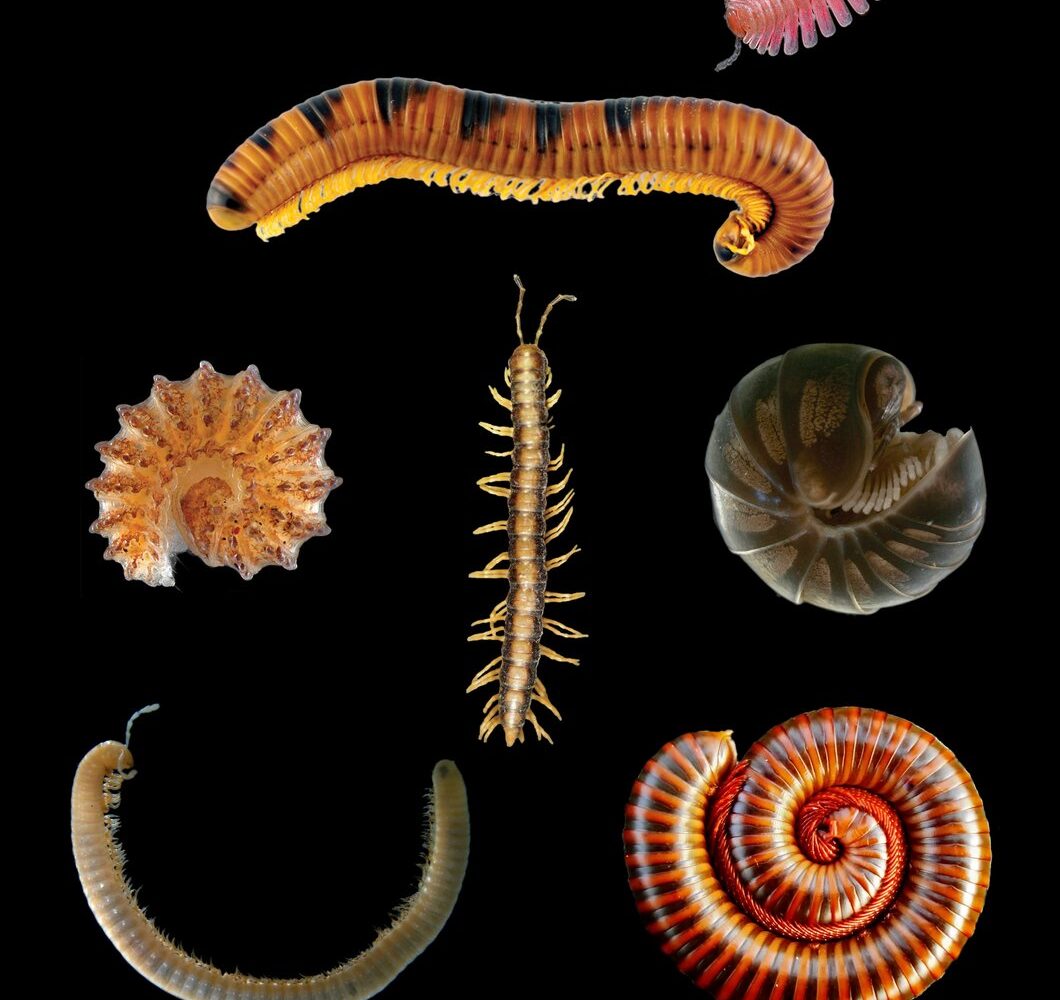
What It Looks Like
Millipedes have long, cylindrical, segmented bodies that are typically dark brown or black, with two pairs of legs on most body segments, which makes them appear to have far more legs than centipedes and move noticeably slower. When threatened, millipedes commonly curl into a tight, coiled spiral rather than trying to flee. They range from under an inch to a few inches long depending on the species.
Where It’s Commonly Found
Millipedes live outdoors in damp organic matter such as mulch, leaf litter, compost piles, and under rocks, logs, or landscape timbers, where they feed on decaying plant material. They don't seek out homes intentionally but often wander indoors accidentally, especially after heavy rain drives them out of saturated soil. Millipedes tend to congregate near foundations where mulch or debris is piled against the exterior wall.
Signs of an Infestation
- Large numbers of millipedes appearing suddenly, especially after rainfall
- Curled, dead millipedes found along baseboards or window sills
- Live or dead millipedes concentrated in damp basements, garages, or crawl spaces
- Millipedes visible congregating near the foundation or entry points outdoors
Health & Property Risks
Millipedes are a nuisance pest and do not bite people. They are not known to carry or transmit disease. Some species can release a mild defensive fluid with a noticeable odor when handled or crushed, which can mildly irritate skin or eyes in sensitive individuals, so it's a good idea to wash your hands after handling one, though this isn't a serious health concern. A sudden millipede presence indoors is usually one of the clearest signs of excess exterior moisture and organic debris near the home.
Treatment Options
Because millipedes are drawn indoors by moisture and decaying organic matter outside, treatment focuses heavily on the exterior. A pest control professional will typically recommend removing mulch and debris from against the foundation, improving drainage, and applying an exterior perimeter treatment to intercept millipedes before they reach the house. Sealing entry points and crack-and-crevice treatment address any that have already gotten inside.
Products & Methods We Use
Treatment commonly involves residual perimeter sprays around the foundation, crack-and-crevice dust treatments at entry points, dehumidifiers or moisture control recommendations for damp interior spaces, and glue board monitors to gauge activity levels after treatment.
Prevention Tips
- Keep mulch, leaf litter, and plant debris pulled back from the foundation
- Improve yard grading and gutter drainage so water flows away from the house
- Seal cracks, gaps, and utility openings around the foundation and lower walls
- Run a dehumidifier in basements and crawl spaces during humid months
- Sweep or vacuum up millipedes after rain events rather than letting them accumulate
- Keep gutters clean and downspouts extended away from the home