
What It Looks Like
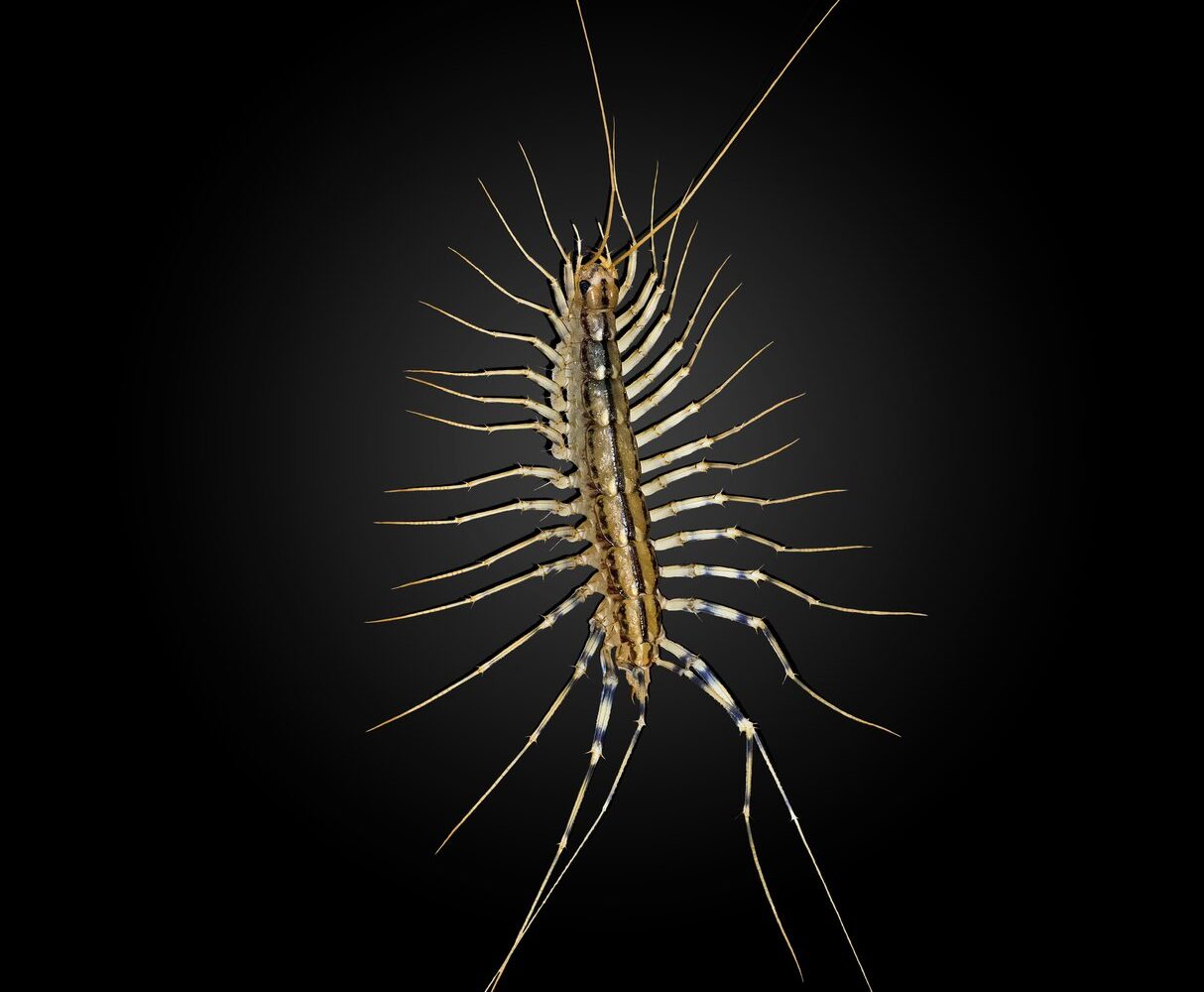
Centipedes have long, flattened bodies made up of multiple segments, with a single pair of legs attached to each segment, which lets them move quickly. The common house centipede is yellowish-gray with dark stripes, long legs, and long antennae, and can grow up to about an inch and a half including its legs. Their rapid, erratic movement across floors and walls is often the most memorable feature, and it's a key way to tell them apart from millipedes, which move much more slowly.
Where It’s Commonly Found
Centipedes prefer dark, damp environments and are commonly found in basements, crawl spaces, bathrooms, and closets, as well as under leaf litter, mulch, and stones outdoors. As predators, they are drawn to areas with other small insects and spiders to feed on. They typically enter homes through cracks, gaps around foundations, or utility openings while seeking both moisture and prey.
Signs of an Infestation
- Occasional sightings of fast-moving centipedes, usually at night
- Presence concentrated in damp areas such as basements, bathrooms, or crawl spaces
- Centipedes found near other insect activity, since they hunt small pests
- Quick scurrying behavior when a light is turned on or the insect is disturbed
Health & Property Risks
Centipedes are a nuisance pest, not a dangerous one. House centipedes technically have the ability to bite, but they rarely do so and their bite is not medically significant for most people, similar to a minor insect bite. They are not known to transmit disease. Because centipedes need moisture to survive and often follow other insects as a food source, their presence can be a useful signal of excess dampness or an underlying insect issue elsewhere in the home.
Treatment Options
Since centipedes are drawn to both moisture and prey insects, effective treatment addresses both factors. A pest management company will typically recommend dehumidification in damp areas, seal likely entry points, and treat cracks and crevices where centipedes travel. Reducing the population of other household insects they feed on is often an important part of long-term control, along with an exterior perimeter treatment.
Products & Methods We Use
Typical treatment tools include residual perimeter sprays, crack-and-crevice dust treatments in wall voids and baseboards, dehumidifiers or moisture control recommendations for basements and crawl spaces, and glue board monitors to track activity and identify other insects present.
Prevention Tips
- Use a dehumidifier in basements and crawl spaces to reduce excess humidity
- Repair leaking pipes, fixtures, and any standing water sources indoors
- Seal cracks, gaps, and utility penetrations around the foundation
- Address other insect activity in the home, since it's often what attracts centipedes in the first place
- Clear leaf litter, mulch, and debris away from the exterior walls
- Install door sweeps and weatherstripping to limit entry points