
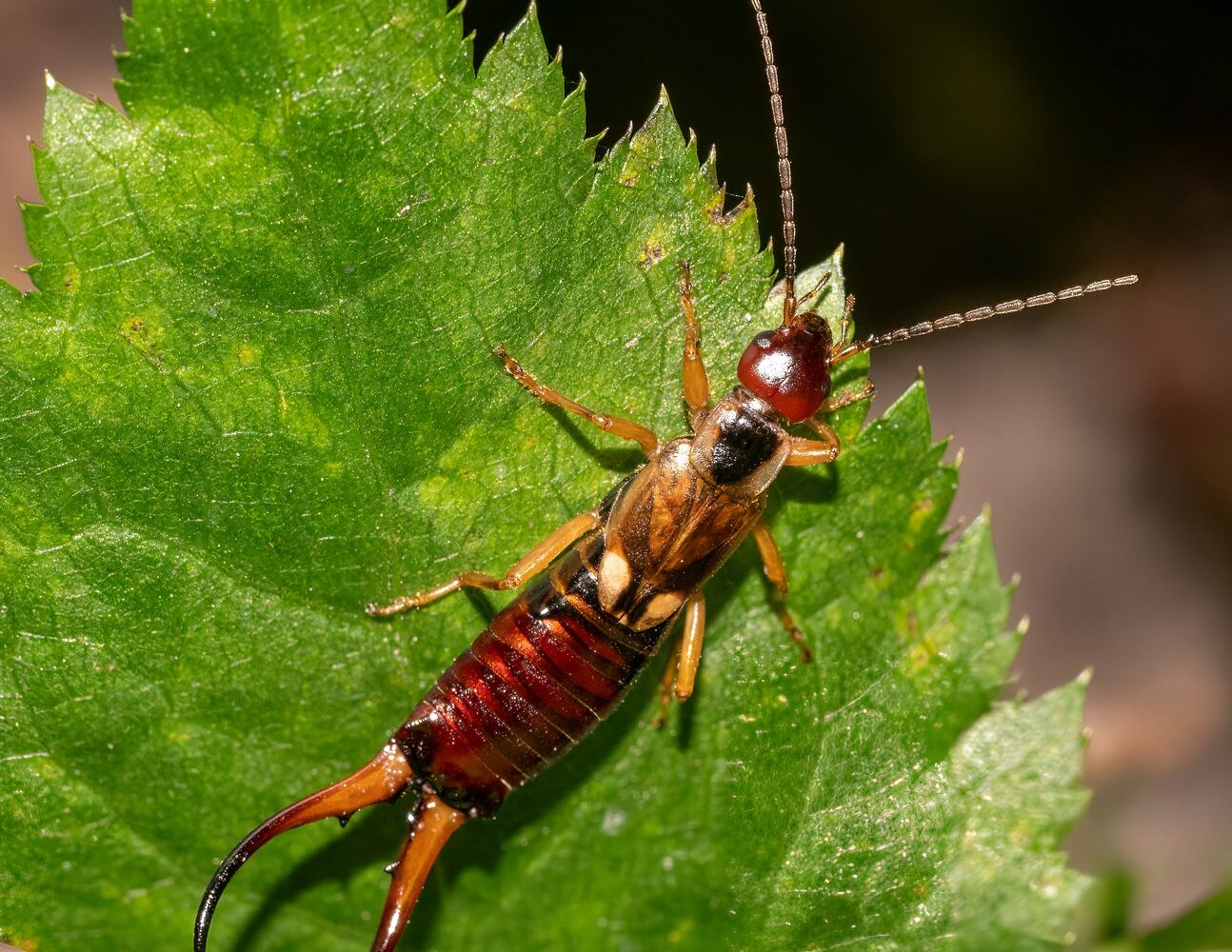
What It Looks Like
Earwigs are elongated insects, typically five-eighths of an inch to one inch long, with reddish-brown bodies and a distinctive pair of pincer-like appendages called cerci at the tip of the abdomen. Some species have wings tucked beneath short wing covers, though they rarely fly. Their flattened, segmented bodies allow them to squeeze into narrow cracks and crevices, and the pincers, while intimidating in appearance, are primarily used for defense and capturing small prey.
Where It’s Commonly Found
Earwigs are outdoor insects by nature and prefer cool, moist environments such as mulch beds, leaf litter, under rocks or landscape timbers, and dense vegetation near a home's foundation. They are most active at night and are drawn to lights near entry points. Earwigs typically wander indoors accidentally through gaps under doors, foundation cracks, or vents, especially when outdoor conditions turn hot and dry or excessively wet.
Signs of an Infestation
- Live earwigs found in damp areas such as basements, bathrooms, or around potted plants
- Sightings near door thresholds, window sills, or foundation cracks, particularly at night
- Minor feeding damage on tender plant leaves and flowers outdoors
- Clusters of earwigs found under mulch, mats, or debris close to the house
Health & Property Risks
Earwigs look more alarming than they actually are. Despite their pincers, they very rarely pinch people, and when they do it is not medically significant, comparable at most to a minor pinch. They are not known to spread disease and do not damage the structure of a home. Finding earwigs indoors in noticeable numbers is usually a sign of excess moisture or vegetation and debris piled too close to the foundation, rather than an indication of any real danger.
Treatment Options
Because earwigs are primarily an outdoor pest, treatment focuses on the exterior of the home. A pest control technician will typically reduce moisture and hiding spots near the foundation, apply a perimeter treatment to create a barrier, and seal common entry points such as gaps under doors and foundation cracks. Crack-and-crevice treatment indoors can address any earwigs that have already made their way inside.
Products & Methods We Use
Common approaches include residual perimeter sprays applied around the foundation, crack-and-crevice dust treatments at entry points, glue board monitors to track activity levels, and dehumidifier or moisture control recommendations for damp interior spaces.
Prevention Tips
- Pull mulch and dense plantings back several inches from the foundation
- Repair leaky spigots, downspouts, and irrigation lines to reduce moisture near the house
- Seal gaps around doors, windows, and foundation cracks, and add weatherstripping where needed
- Switch to yellow or motion-activated exterior lighting, which attracts fewer insects
- Clear leaf litter, grass clippings, and other debris away from the exterior walls
- Ensure gutters and grading direct water away from the foundation