
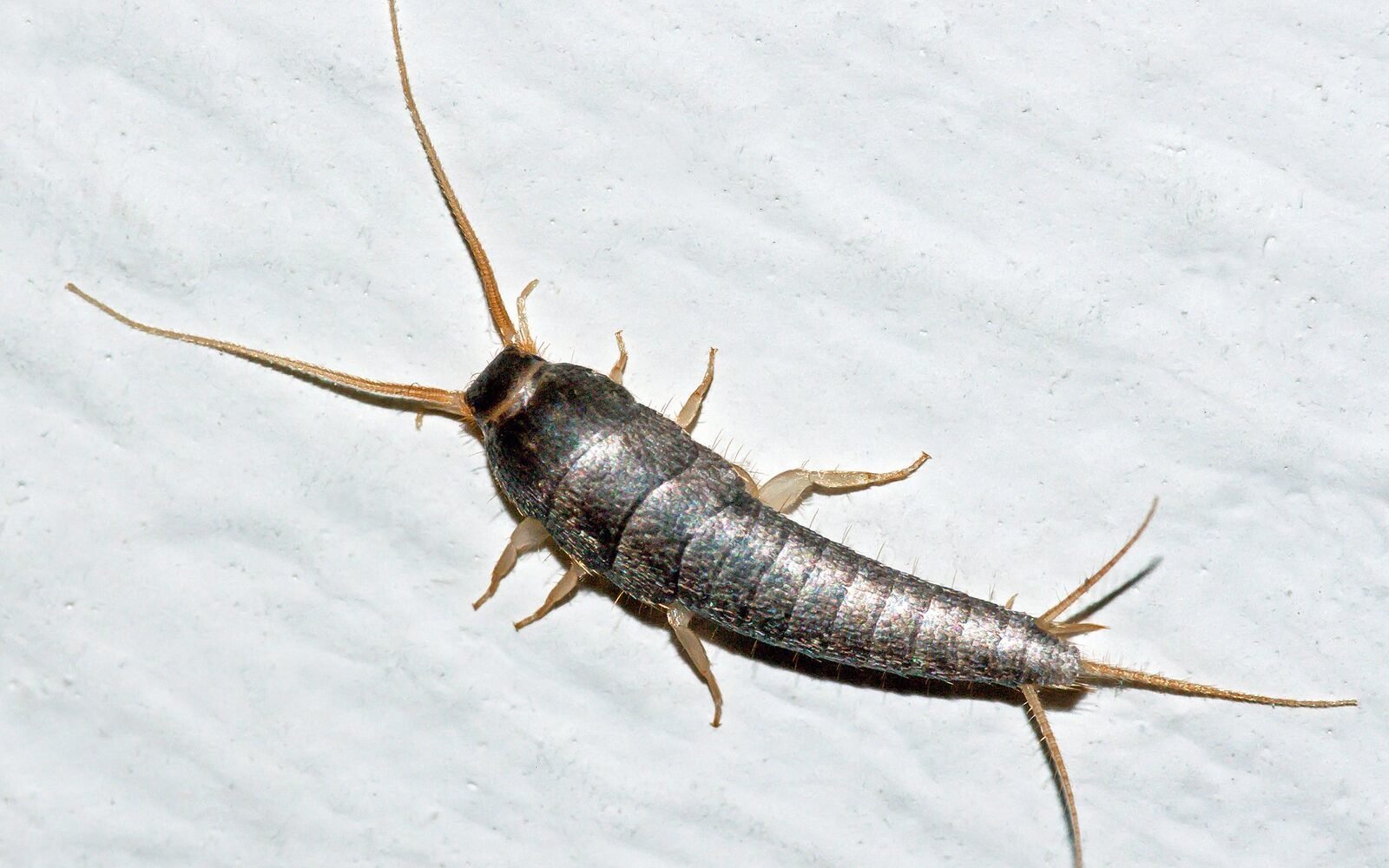
What It Looks Like
Silverfish are small, wingless insects, typically half an inch to an inch long, with a flattened, teardrop-shaped body covered in fine silvery-gray scales that give them a metallic sheen. They have long antennae and three long, thin bristle-like appendages extending from the rear of the abdomen. When disturbed, they move in a quick, side-to-side wriggling motion that resembles a fish swimming, which is how they got their name.
Where It’s Commonly Found
Silverfish thrive in humid, dark environments and are most often found in bathrooms, basements, kitchens, attics, and laundry rooms where moisture levels are higher. They also hide in bookshelves, closets, and behind wallpaper, since they feed on starches found in paper, glue, and some fabrics. Silverfish are nocturnal and typically enter homes through small cracks, gaps around plumbing, vents, or items brought in from storage.
Signs of an Infestation
- Small, pepper-like black droppings in drawers, closets, or storage boxes
- Yellowish stains or small holes and notches in paper, wallpaper, or fabric
- Shed skins left behind as silverfish grow
- Live sightings at night, especially in bathrooms and basements
- Damage to book bindings or the glue on stored boxes and photos
Health & Property Risks
Silverfish are a nuisance pest rather than a dangerous one. They do not bite or sting people and are not known to spread disease. Their presence is usually more of an inconvenience: they can damage books, important documents, wallpaper glue, and certain fabrics or paper goods over time. Because silverfish need high humidity to survive, finding them indoors is often a helpful sign of excess moisture that may be worth addressing in its own right.
Treatment Options
Effective silverfish treatment starts with reducing indoor humidity, since these insects cannot survive in dry conditions. A pest control professional will typically combine moisture reduction with targeted crack-and-crevice treatments in bathrooms, basements, and other high-humidity areas, along with sealing common entry points around plumbing and foundation gaps. Decluttering paper storage and treating the exterior perimeter can further reduce the chances of silverfish re-entering the home.
Products & Methods We Use
Treatment approaches may include crack-and-crevice dust treatments in wall voids and hidden gaps, residual perimeter sprays around the foundation, dehumidifiers or moisture control recommendations for problem areas, and glue board monitors to track activity and confirm treatment success.
Prevention Tips
- Run a dehumidifier in basements, bathrooms, and other consistently damp rooms
- Fix leaking pipes, faucets, and any sources of excess moisture promptly
- Seal cracks and gaps around baseboards, pipes, and foundation walls
- Store books, documents, and photos in sealed plastic containers rather than cardboard boxes
- Improve ventilation in bathrooms and laundry areas, using exhaust fans as needed
- Vacuum regularly, including closets and storage areas, to remove eggs and food debris